The Toxic Algal Bloom Threat Growing In Australian Waters
A major marine algal bloom affecting parts of South Australia has put water quality back in the spotlight.

Hello Water Filtration
Water Quality Experts
A major marine algal bloom affecting parts of South Australia has put water quality back in the spotlight, with scientists warning that environmental conditions may be creating the perfect environment for more frequent outbreaks.
While harmful algal blooms are not a new phenomenon, experts say warmer temperatures, nutrient runoff, & changing weather conditions are increasing the risk of outbreaks across Australia.
The Murray-Darling Basin Authority has also reported elevated blue-green algae risks in several regions during 2026.
What Are Harmful Algal Blooms?
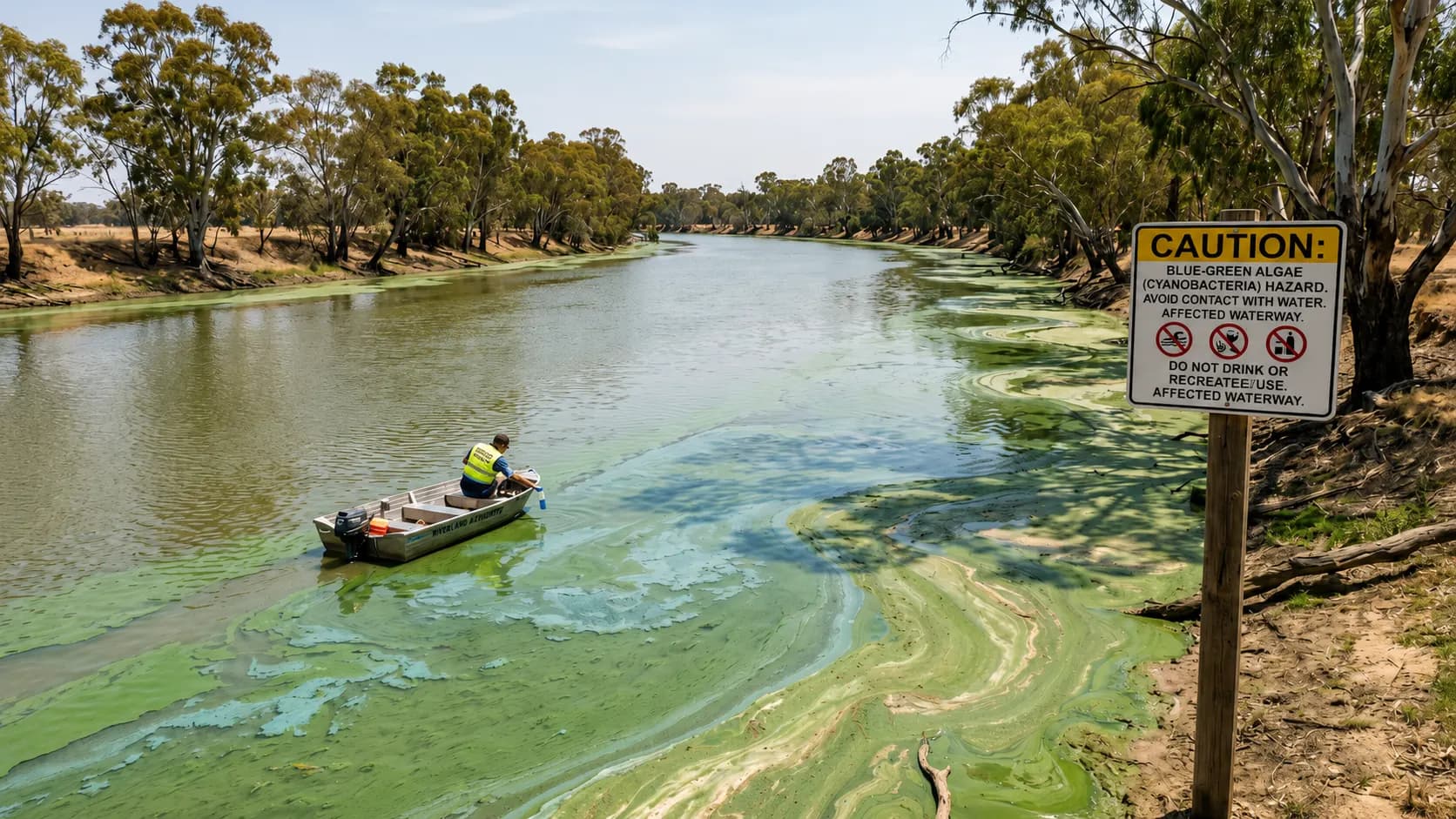
Despite their name, blue-green algae are not actually algae. They are a type of bacteria known as cyanobacteria that naturally occur in Australian waterways.
Under the right conditions, these organisms can multiply rapidly, forming what is known as a harmful algal bloom. Some harmful algal blooms can produce toxins that pose risks to people, pets, wildlife, & aquatic ecosystems. They can also lead to waterway closures, impact drinking-water treatment processes, & affect the taste & odour of water supplied to homes & communities.
South Australia's Bloom Draws National Attention
Much of the recent attention has focused on South Australia's ongoing marine algal bloom, which has affected coastal communities, marine habitats, tourism operators, & commercial fishing industries.
ABC News & The Guardian has reported that a second wave "could be imminent" highlighting ongoing concern among scientists monitoring the event.
The Growing Connection Between Climate Conditions & Water Quality
Experts say harmful algal blooms often occur when several environmental factors align.
Warmer temperatures can accelerate algae growth, while lower river flows & extended dry periods can create conditions where blooms are more likely to thrive.
At the same time, nutrient runoff entering rivers, reservoirs, lakes, & coastal waters can provide the fuel needed for rapid growth.
The South Australian event has highlighted the growing connection between climate conditions, nutrient runoff, & water-quality problems, with scientists continuing to examine how these factors may influence future bloom events across Australia.
What Does This Mean For Australians?
For most Australians, harmful algal blooms are a reminder that water quality is influenced by far more than what happens at the treatment plant.
While Australia's drinking water remains highly regulated, events such as harmful algal blooms highlight the complex environmental factors that can influence water quality. They also demonstrate the significant monitoring, treatment, & management required to maintain safe drinking water supplies.
When blooms occur, water providers may need to increase treatment processes to manage potential impacts, including toxins, taste, & odour issues.
Beyond drinking water, harmful algal blooms can affect recreational waterways, local ecosystems, fishing activities, tourism operators, & regional communities, demonstrating how closely environmental health & water quality are connected.
Understanding where your water comes from & the factors that influence its quality is becoming increasingly important as Australia faces evolving environmental challenges.
Events like South Australia's ongoing algal bloom serve as a reminder that healthy waterways are essential to healthy communities. From rivers & reservoirs to coastal ecosystems, the condition of Australia's water sources has a direct impact on the quality of the water we rely on every day.
As environmental challenges continue to evolve, understanding the factors that influence water quality is becoming increasingly important. Whether it's harmful algal blooms, changing weather patterns, or nutrient runoff entering waterways, staying informed helps Australians better understand the complex journey water takes before it reaches their homes.
"At Hello Water Filtration, we're passionate about helping Australians better understand their water. Because the more we know about the factors affecting our rivers, reservoirs, catchments, & drinking water supplies, the better equipped we are to make informed decisions about the water we use every day."